
What Is a Court Docket in Franklin County
A docket is the court’s running schedule and event list for a case. In Franklin County District Court, docket information can show a case number, caption, party roles, attorneys, hearing date, time, courtroom, judicial officer, and hearing type. The researched Franklin County web docket included criminal and traffic examples with case numbers such as FR-2026-CR-000128 and FR-2026-TR-000602. It also showed hearing types including arraignment, first appearance, bond appearance, motion, review hearing, diversion status, disposition, and sentencing.
The docket differs from the complete court record. A docket may tell you that a motion was heard or that a disposition hearing is scheduled, but the full case file may contain the complaint, pleadings, motions, orders, evidence-related filings, judgment, sentence, or payment records. For Franklin County court dockets, the safest approach is to use the public docket for schedule and event awareness, then use CaseSearch, courthouse terminals, or the Franklin Clerk of the District Court for the underlying record.
Franklin County’s archived notices can affect court schedules. The Franklin County archived court notices source appears in this docket-page screenshot.
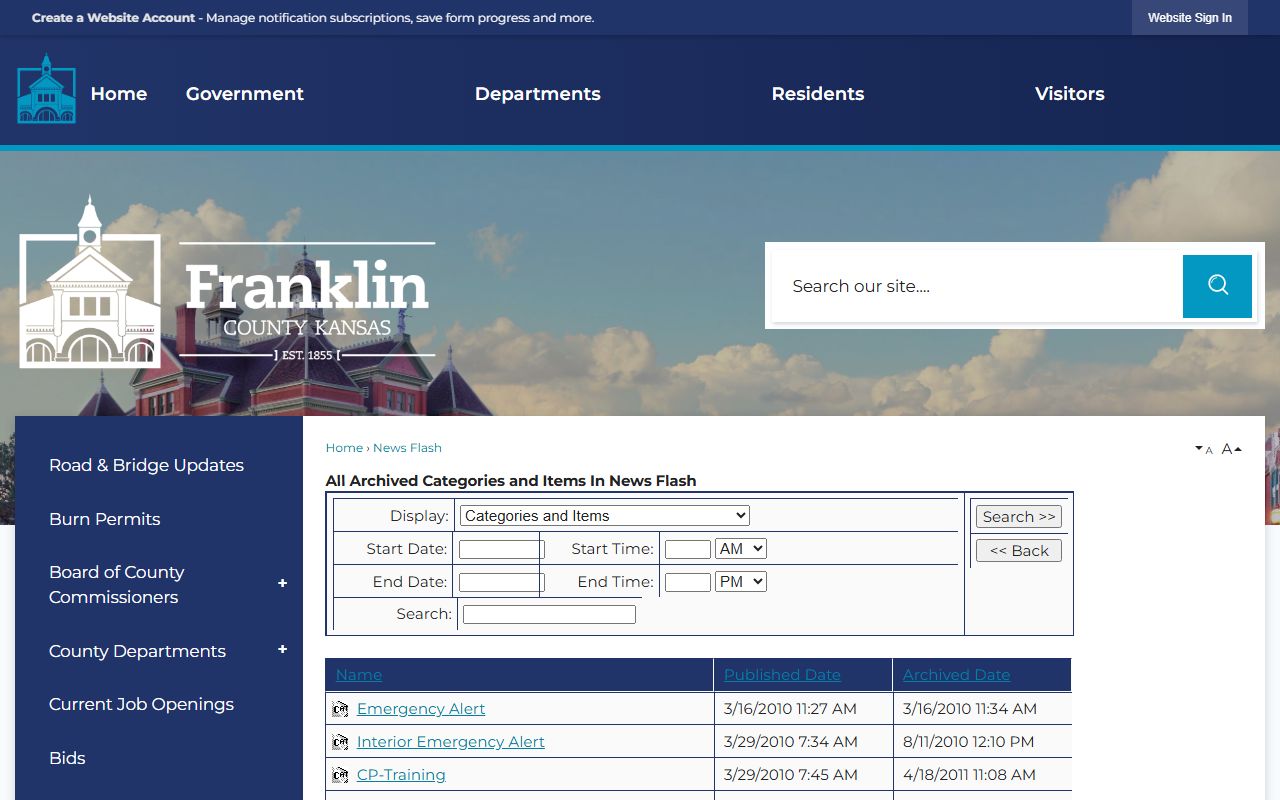
Closure and training notices are not a docket substitute, but they are useful when a hearing date or clerk-counter visit falls near a holiday, system outage, or district-wide office closure.
How to Find Franklin County Dockets Online
Start with Kansas CaseSearch for public district court case information and docket events. Franklin County’s older court case page points users to online access and courthouse public-access computers, and Kansas now uses CaseSearch in place of the former Public Access Portal. If the docket relates to an Ottawa city ordinance or local traffic matter, Ottawa Municipal Court may be the court of record instead of Franklin County District Court.
- Open Kansas CaseSearch and search by case number, party name, business name, or citation.
- Confirm the case is a Franklin County District Court or Fourth Judicial District matter.
- Review the docket entries for hearing date, time, courtroom, hearing type, party roles, and attorney names.
- For payable traffic, criminal, juvenile offender, or fish and game cases, check whether the KSCourts Central Payment Center also shows the case.
- Call or visit the Franklin Clerk of the District Court when the setting is urgent, recently changed, sealed, or missing online.
The KSCourts Central Payment Center search is not a full docket system, but it can help identify payable cases that also have docket consequences.
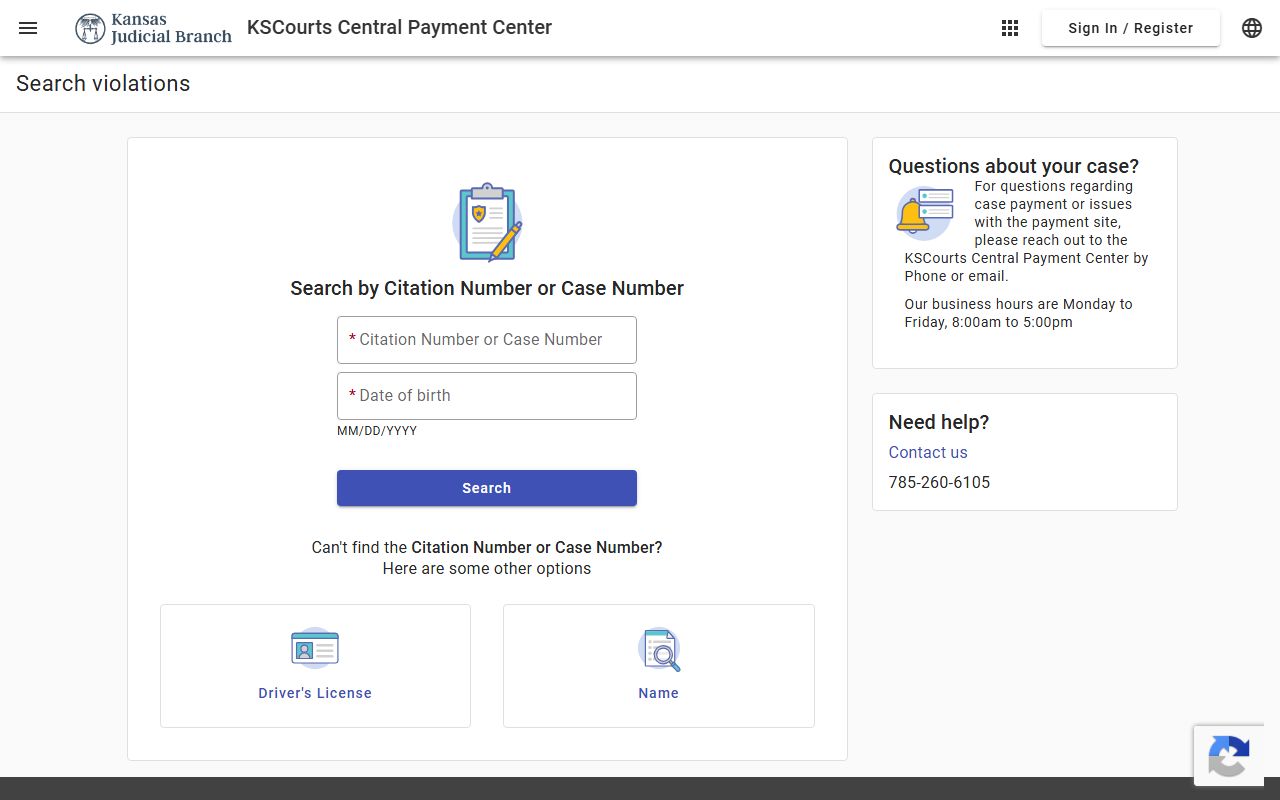
Payment portals should not be treated as proof that a court appearance is cancelled. Ottawa Municipal Court and district court payment rules may still require an appearance or judge approval depending on the charge and status.
Sample Franklin County Docket Entry
The Franklin County District Court web docket PDF showed a public schedule with a generation timestamp, date range, page number, case caption, party role, attorney, hearing date and time, courtroom, judge or official, and hearing type. Some entries display shorthand notes such as “First W Atty.,” “Def. to Hire Atty.,” “Paid Dis Off.,” “Interpreter scheduled,” or “Paper Review.” Sealed matters may mask party and attorney details.
| Field | What It Shows |
|---|---|
| Case Number | Franklin County format using FR, year, case type, and sequence, such as FR-2026-CR-000128. |
| Case Caption | State of Kansas vs. a defendant, In the Matter of a subject, or sealed text when restricted. |
| Party / Attorney | Prosecutor, defendant, subject, private attorney, Franklin County Attorney’s Office, or Pro Se. |
| Hearing Setting | Date, time, courtroom, judicial officer, and hearing type. |
| Docket Note | Short procedural note, such as attorney status, interpreter, diversion status, paper review, or payment-related notation. |
Courts That Publish Dockets in Franklin County
Franklin County is in Kansas’s Fourth Judicial District. District court dockets cover state criminal cases, traffic cases filed in district court, civil cases, small claims, probate, family, juvenile, protection order, and other matters within Kansas district court jurisdiction. Municipal court dockets are separate because Ottawa Municipal Court is a city court for traffic infractions and ordinance violations. Appeals from district court generally go to the Kansas Court of Appeals, with Kansas Supreme Court review in selected cases.
The Franklin County court-office page identifies Theresa Morrow as Clerk of the District Court and lists the Franklin County District Court judges. The Fourth Judicial District contact page gives the Ottawa clerk counter details. Sheriff Jeff Richards appears on the Franklin County Sheriff administration page; sheriff activity can lead to criminal docket entries, but sheriff records are not the district court docket.
- Franklin County District Court handles district court dockets at 301 S. Main, Ottawa, with Clerk of the District Court phone (785) 242-6000.
- Ottawa Municipal Court handles Ottawa traffic infractions and city ordinance violations; city materials list 101 S. Hickory and city phone 785-229-3600.
- Kansas CaseSearch provides statewide public district court case information, but Franklin County excludes divorce, visitation, support, and paternity case information from online search.
- Courthouse public-access computers at Fourth Judicial District courthouses are the best fallback for restricted online categories and local confirmation.
Docket vs. Full Case Record
A docket is usually the fastest way to understand where a case is procedurally. The full case file is broader and may include documents that explain why the docket changed. For example, a docket may say “Disposition and Sentencing,” while the full record may include the plea form, sentencing journal entry, probation terms, financial obligations, and any diversion documents. For family categories that Franklin County excludes from online search, the docket itself may not be available online even when a case exists.
| Docket | Full Case Record | |
|---|---|---|
| Format | Calendar and event list | Case file and documents |
| Access | Often visible through CaseSearch or public docket resources | May require CaseSearch document access, copy fees, or a courthouse visit |
| Use | Track hearings, deadlines, attorneys, and status | Review pleadings, orders, judgments, sentence, or detailed filings |
| Limits | Can be sealed, abbreviated, or changed after posting | Can be confidential, redacted, sealed, or available only to parties/court order |
How to Read a Franklin County Docket
Read the case number first. The case type code helps separate criminal CR matters from traffic TR matters and other categories. Then read the caption and party roles. “State of Kansas vs.” generally signals a state criminal or traffic prosecution. “In the Matter of” can appear in special or non-criminal matters. A party marked Pro Se is self-represented. A prosecutor entry may list the Franklin County Attorney’s Office, which is the office responsible for state criminal prosecutions in Franklin County.
Next, read the hearing type and note. Arraignment, first appearance, and bond appearance occur early in many criminal or traffic cases. Motion, review hearing, diversion status, and disposition entries show case progress. “Disposition and Sentencing” usually appears near resolution. A sealed entry is a warning that public information is intentionally limited by law or court order. If the docket mentions a payment issue, diversion, or traffic status, use the official payment and driver-record channels only as supplemental confirmation.
The Kansas Division of Vehicles online services page is one official source for driver-record channels related to some traffic docket outcomes. The Kansas Division of Vehicles online services source is shown below.
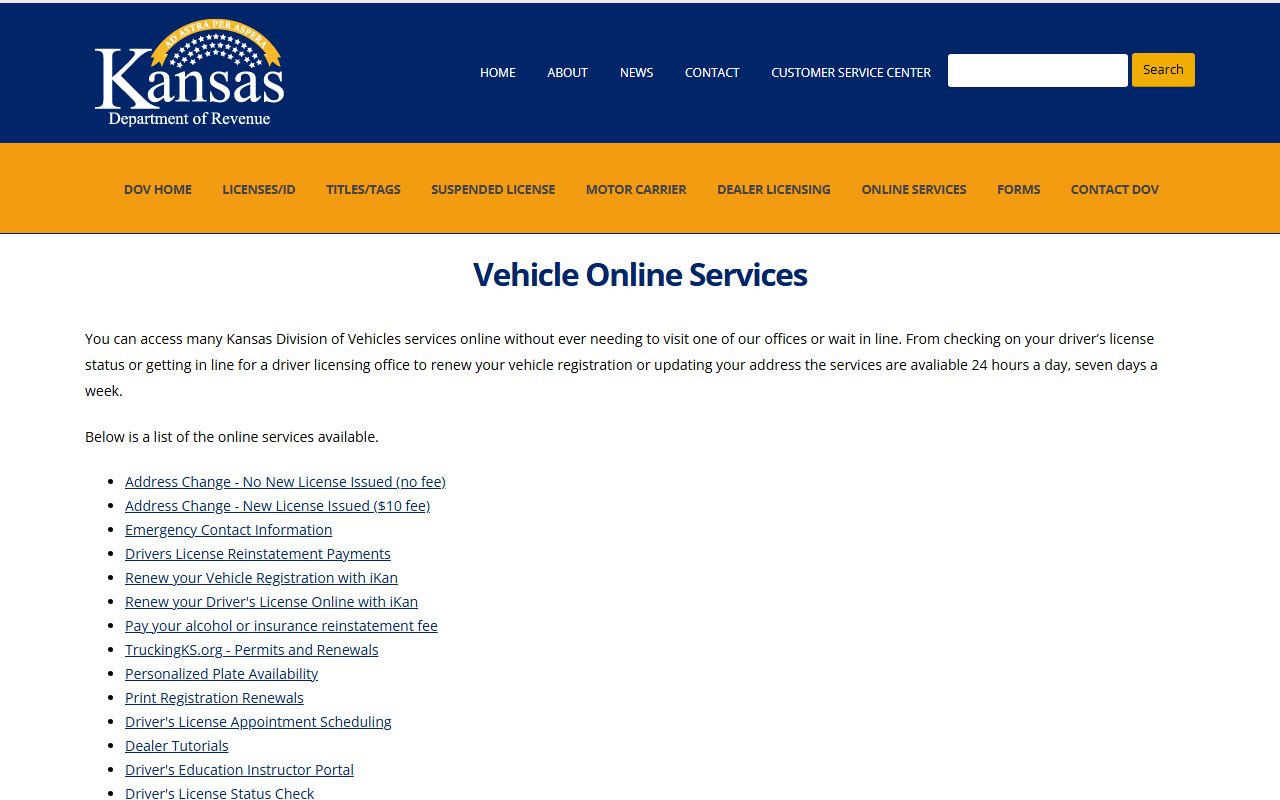
A driver record is separate from the court docket. A traffic docket may show a court disposition, while the Kansas Department of Revenue record may show license status, suspensions, or conviction reporting.
The free Kansas driver license status check is another docket-adjacent tool when a traffic case may affect license status.
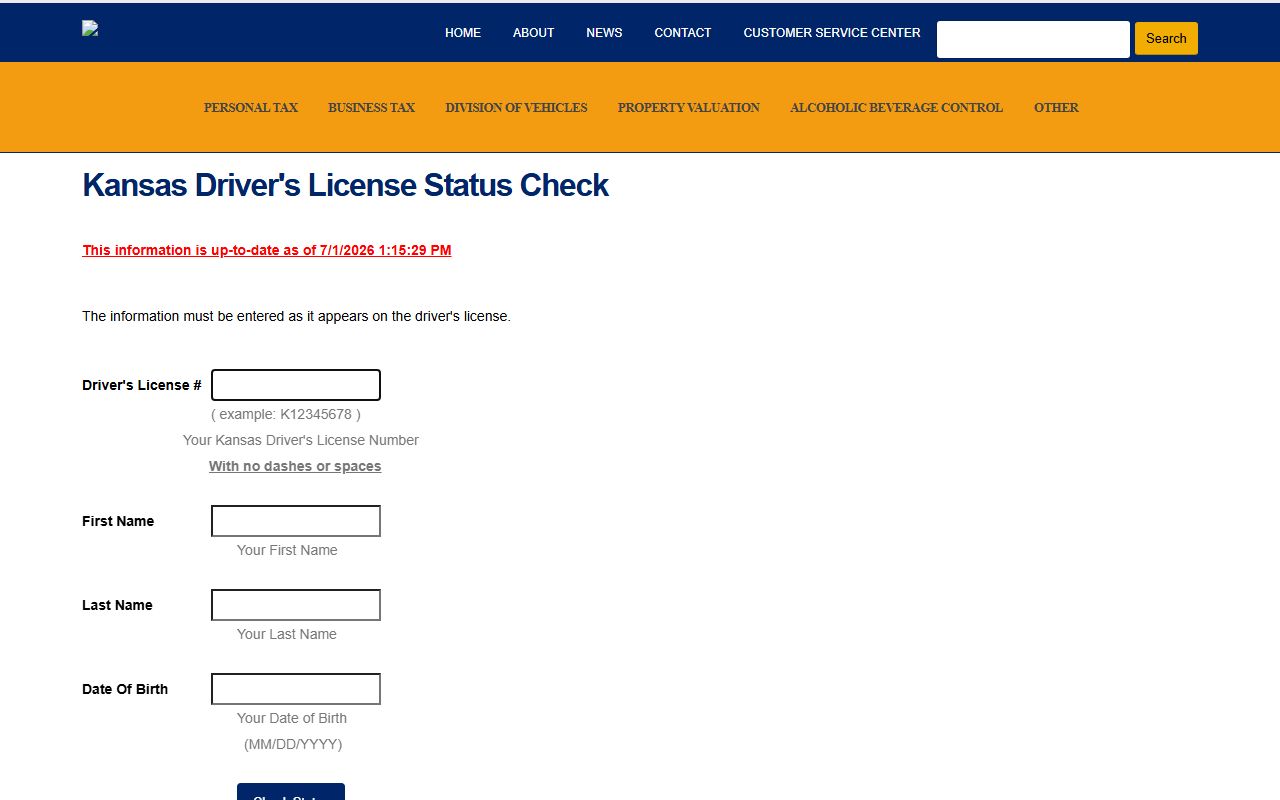
Use the status check for license standing, not for the court docket itself. Court settings still need to be confirmed through the court or CaseSearch.
For paid or subscribed driver-record access, the Kansas.gov motor vehicle records portal is a separate official channel.
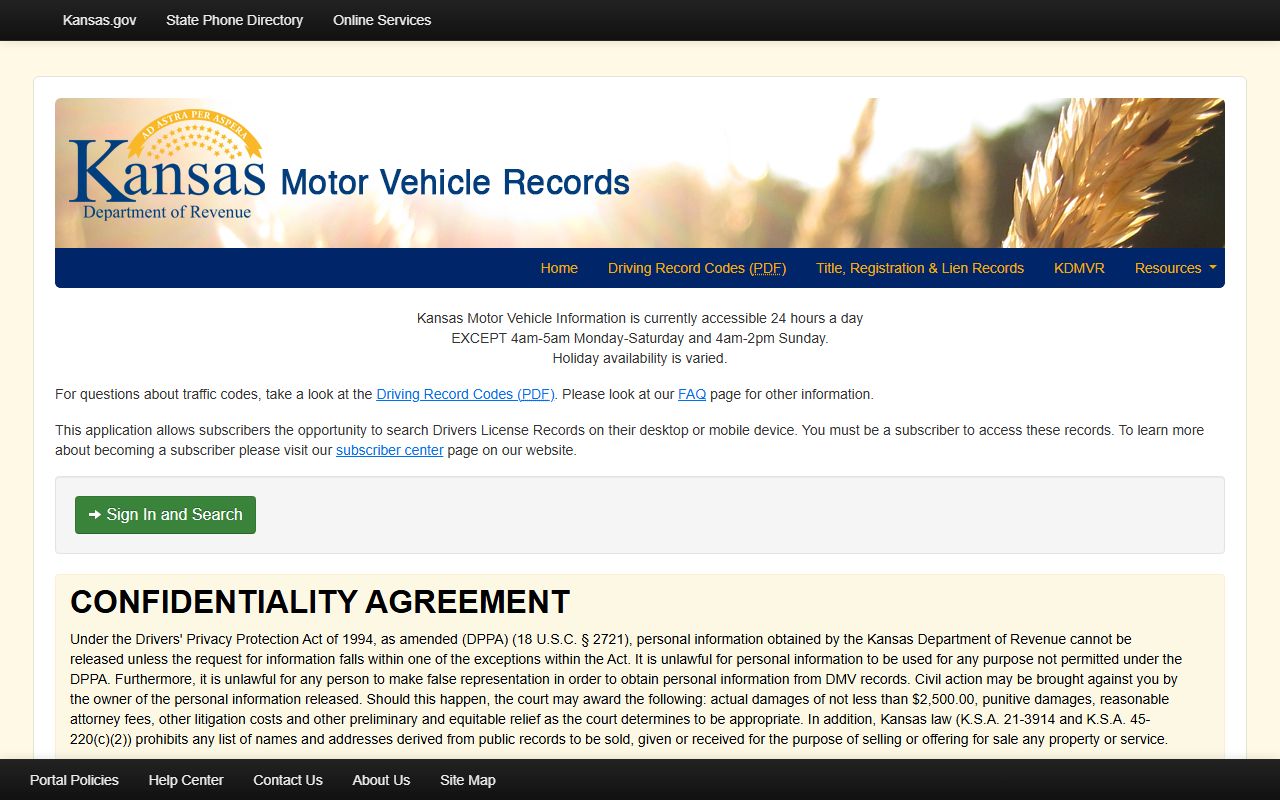
Traffic docket research often requires both court and driver-record context, but the custodian changes: the court keeps the citation case, while Kansas motor-vehicle agencies keep driver-status and driver-history records.